Leoni Cables Cable Technology & Engineering Capabilities

Core competencies in cable design, fire performance engineering, and ISO 17025 accredited testing.

Core Technology Competencies

Measurable technical capabilities that differentiate Leoni Cables in demanding industrial applications.

Advanced Fire Performance Engineering

Our cables are engineered to exceed IEC 60332-3 Category A flame propagation limits and IEC 61034 smoke density requirements. Halogen-free constructions achieve a light transmittance of ≥60% under IEC 61034, critical for evacuation safety in tunnels and high-rise buildings.

Parameter Standard Leoni Performance
Flame Propagation IEC 60332-3 Cat A Char length <1.5 m
Smoke Density IEC 61034 Transmittance ≥65%
Halogen Content IEC 60754-1 <0.5% HCl equivalent
Circuit Integrity IEC 60331 ≥90 min at 830°C

EMC Shielding & Signal Integrity

Proprietary shielding constructions combining braided copper, aluminum-polyester foil, and drain wire configurations to achieve shielding effectiveness ≥85 dB across 30 MHz to 1 GHz for instrumentation and data cables in electrically noisy industrial environments.

Shield Type Coverage Effectiveness
Foil Shield 100% ≥60 dB
Braid Shield 85-95% ≥70 dB
Foil + Braid 100% ≥85 dB
Double Shield 100% ≥100 dB
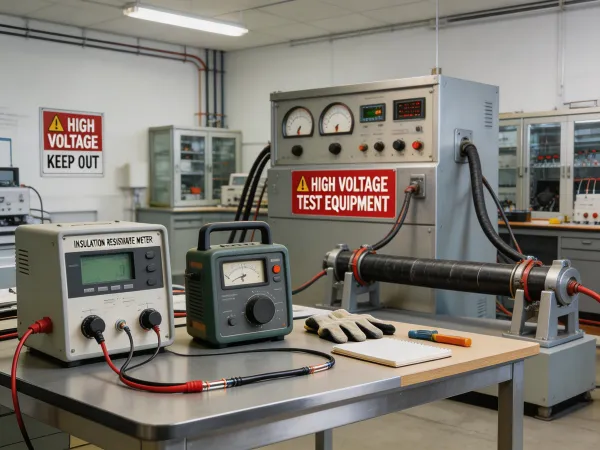
Leoni Cables ISO 17025 accredited testing laboratory

ISO 17025 Accredited Testing Laboratory

Our in-house laboratory operates under ISO/IEC 17025 accreditation, performing over 40 standardized test methods traceable to national metrology institutes.

Dielectric Strength Up to 100 kV AC / 150 kV DC test capability
Insulation Resistance Megger testing at 500V to 5 kV DC
Mechanical Endurance 10,000+ cycle flex testing per IEC 60227-2
Thermal Aging Accelerated aging chambers: -40°C to +300°C
Fire Testing IEC 60332-1/3, IEC 61034, IEC 60754

Selection Considerations: Standards & Design Trade-offs

IEC vs. UL Standard Compliance

Engineers specifying cables for multinational projects face a fundamental standards decision. IEC-compliant products (IEC 60502, IEC 60332) cover European, Asian, and African markets under a unified framework, simplifying global product line management. UL-listed products (UL 1072, UL 44) are mandatory for North American installations, where project specifications routinely require UL listing marks.

The two systems differ in test methodology: IEC flame tests (IEC 60332-3) evaluate cable bundles under vertical tray conditions, while UL flame tests (UL 1685) use different sample configurations and pass/fail criteria. A cable passing one standard does not automatically satisfy the other. Leoni Cables addresses this by maintaining dual certification across the full product range, though dual compliance adds 8-12% to material costs due to additional insulation and jacket requirements.

Thermal-Magnetic vs. Electronic Trip Protection

Cable protection device selection directly affects cable sizing and system reliability. Thermal-magnetic circuit breakers offer simplicity and independence from external power, making them suitable for distributed installations in harsh environments. However, their fixed trip curves limit protection precision for cables operating near thermal limits.

Electronic trip units provide adjustable protection curves (LTPU, STPU, instantaneous) that can be tuned to match specific cable ampacity tables, reducing nuisance tripping while maintaining code-compliant protection. The trade-off is higher upfront cost (typically 40-60% premium over thermal-magnetic equivalents) and dependency on auxiliary power for the electronic module. For cable systems rated above 400A, electronic trip units generally deliver better discrimination and lower energy let-through (I²t) values.

Technical Limitations & Operating Boundaries

Maximum Continuous Operating Temperature XLPE insulation: 90°C conductor temperature. Exceeding this limit accelerates insulation degradation and voids warranty coverage. Silicone-insulated cables available for applications up to 180°C but at reduced current ratings per IEC 60364-5-52 derating tables.
UV Exposure Limitation Standard PVC and LSZH jacket materials are not rated for continuous outdoor UV exposure beyond 5 years without protective conduit. UV-stabilized PE jackets extend outdoor service life to 20+ years but are limited to -20°C minimum installation temperature.
Minimum Bend Radius Fixed installation: 6× cable OD for unarmored, 12× for steel wire armored. Violating minimum bend radius causes insulation cracking and premature dielectric failure. High-flex cables (robotic applications) rated for 5 million+ bend cycles but only at bend radius ≥7.5× OD.
Chemical Resistance Standard PVC jackets degrade on prolonged contact with hydrocarbons, ketones, and chlorinated solvents. Chemical-resistant CPE or TPE jackets required for process industry applications — consult compatibility charts before specification.

Technical Documentation

Download datasheets, application guides, and white papers from our engineering library.

📄
Industrial Cable Selection Guide
PDF · 2.4 MB · Updated March 2026
Download
📄
Fire Performance Cable Technical White Paper
PDF · 1.8 MB · IEC 60332/61034 Compliance
Download
📄
EMC Shielding Application Note
PDF · 980 KB · Braid vs. Foil Comparison
Download
📄
Cable Tray Installation & Loading Guide
PDF · 3.1 MB · NEMA VE 1 / IEC 61537
Download

Need Engineering Support?

Our cable engineers are ready to help with specification queries, custom designs, and technical documentation.

Contact Technical Team